Wait, That’s A Thing?
If you bring up the topic of barbecue around westerners, you’ll get a grin and a delightful conversation about 90% of the the time. (And about 80% of the time, they’ll have the charcoal ready start a barbecue right on the spot.)
If you bring up the topic of Asian barbecue around westerners, there’s a good chance they’ll rave about how much they love Korean BBQ. They’ll talk about their last experience at their favorite spot in town.
Maybe some will even bring up the Japanese yakiniku (焼肉).
But Chinese BBQ? Most westerners haven’t even heard those two words in the same sentence before.
The western world has an obsession with Chinese buffets, products, and tattoos… But for some reason, Chinese BBQ usually goes completely unnoticed.
So in an effort to spread a little awareness, we’ve made it our mission here to shed some light on this hidden gem, and hopefully make you just as hungry as we were while writing this article.
Enjoy!
Chinese BBQ: The Origin Story
Long before modern skewers lined night markets, barbecue was already a celebrated part of life in ancient China.
Evidence suggests that barbecue parties date back to at least 220 AD during the Wei dynasty. Ancient burial bricks depict barbecue parties with chefs preparing strips of meat onto skewers and roasting them over a fire.1

The scenes suggest that barbecuing was not just a cooking method, but a social ritual tied to celebration and community. As techniques and tastes evolved, these early practices laid the groundwork for regional styles and innovations that would emerge over centuries.
Present Day
Two thousand years later, this tradition still holds strong– skewers and all.
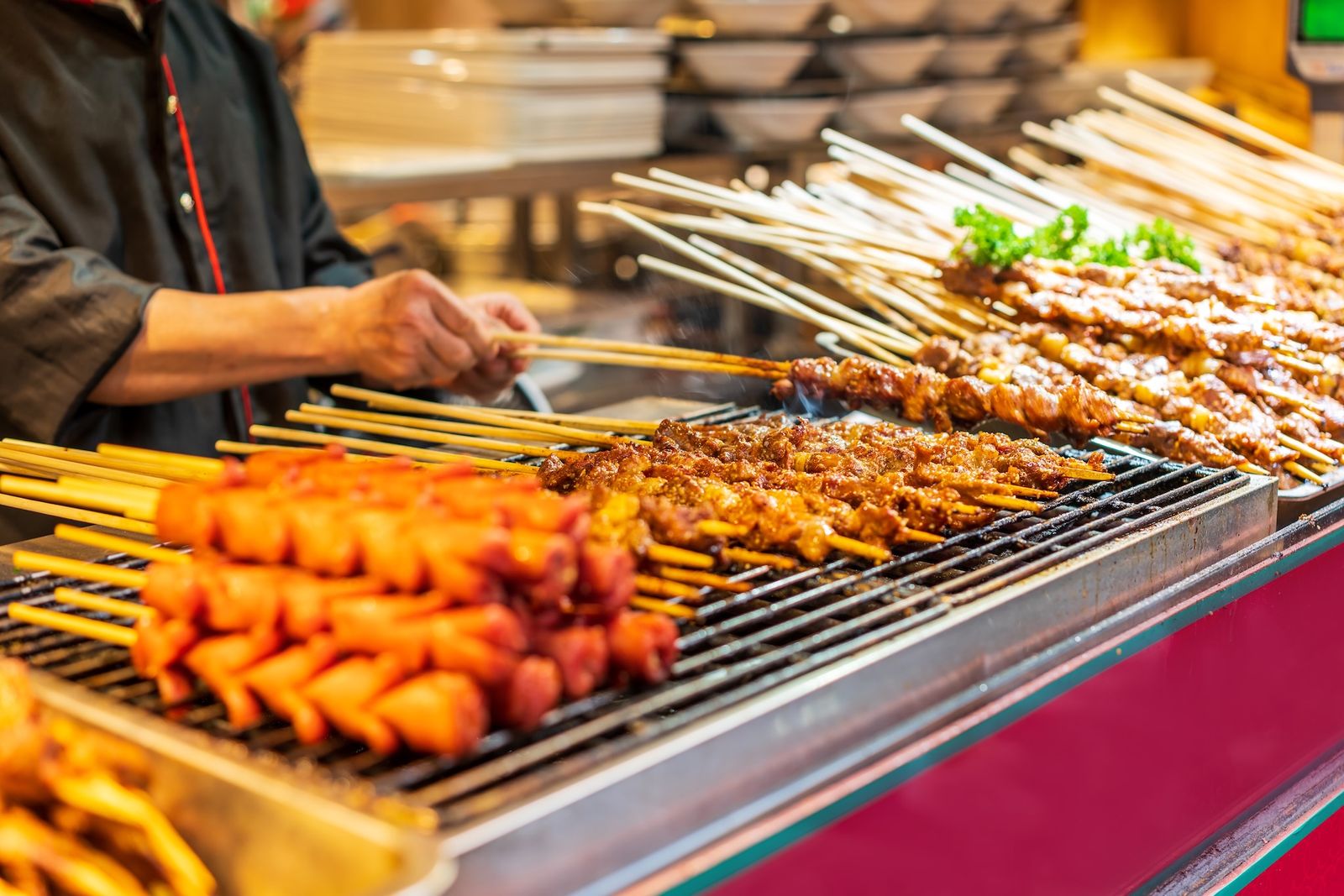
In present day China, barbecue– known locally as “shāo kǎo” (烧烤)– is still a key cultural element. A quick evening walk through just about any Chinese city will provide all the proof you need.
The most common form of barbecue in China comes from street food stalls, called dà páidàng (大排档). These small shops typically open up at night in busy parts of the city, luring passers-by with smells of barbecue meat roasting right on the spot.
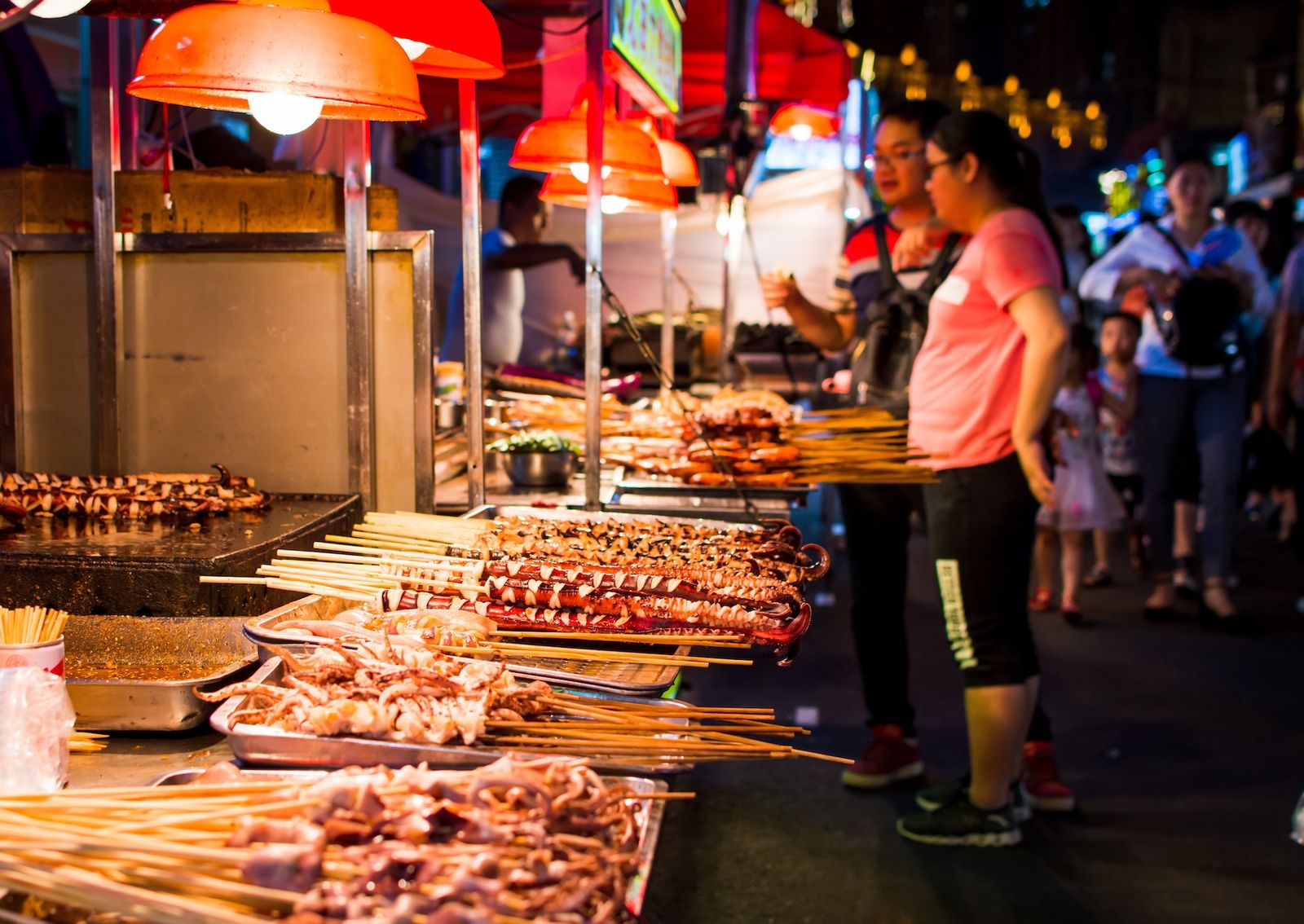
These dà páidàng are often grouped together in night markets, all coming together to bring the city to life after the sun goes down.
In large cities where space is limited, this arrangement is ideal. Most people don’t have a backyard or patio with space for a grill– not to mention the time to cook– which puts these dà páidàng in good demand.
Of course, BBQ isn’t the only thing served. When you visit a night market, you’ll find dozens of different food stalls offering small (and not so small) “snacks,” known as xiǎochī (小吃), which iterally translates to “small eats.”
Rather than choosing one main course, the idea is to indulge in smaller portions of many different flavors.
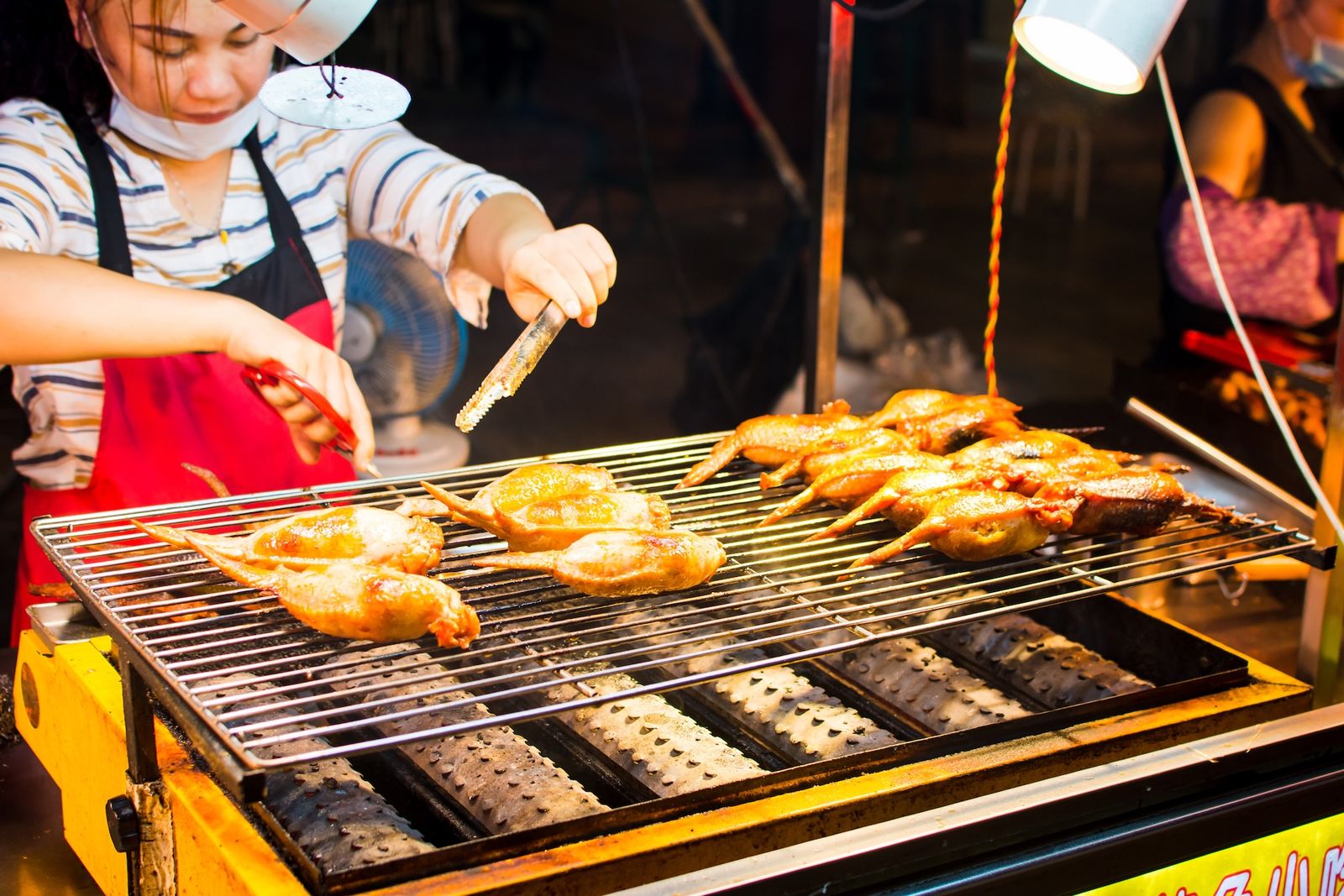
As you can imagine, it’s common to see groups of friends and family at these night markets, sitting on economical plastic chairs or stools, eating together and drinking to their hearts’ delight.
But That’s Not All!
In addition to the iconic night markets and food stalls, Chinese barbecue also finds itself in less busy settings as well.
Indoor, sit down BBQ restuarants aren’t uncommon in China. Though unlike Korean BBQ restaurants, the food is prepared by the restaurant chefs rather than being prepared at the table by the guests.
Further out from the large cities, where space is more abundant, many homes do have space for a barbecue grill setup. On weekends or holidays when city-dwellers return to their hometowns, families often set up a grill in their own yard and barbecue together.
For those who don’t have a designated grill person in the family or friend group, it’s becoming more common (especially among the younger generations), to rent a barbecue area or camping site to enjoy the social cooking experience. In these settings, friends and family bring their own food and grill together, chatting and cooking at the same time.
What Are We Cooking?
Unsurprisingly, the most commonly grilled foods in China include chicken, pork, beef, and lamb.
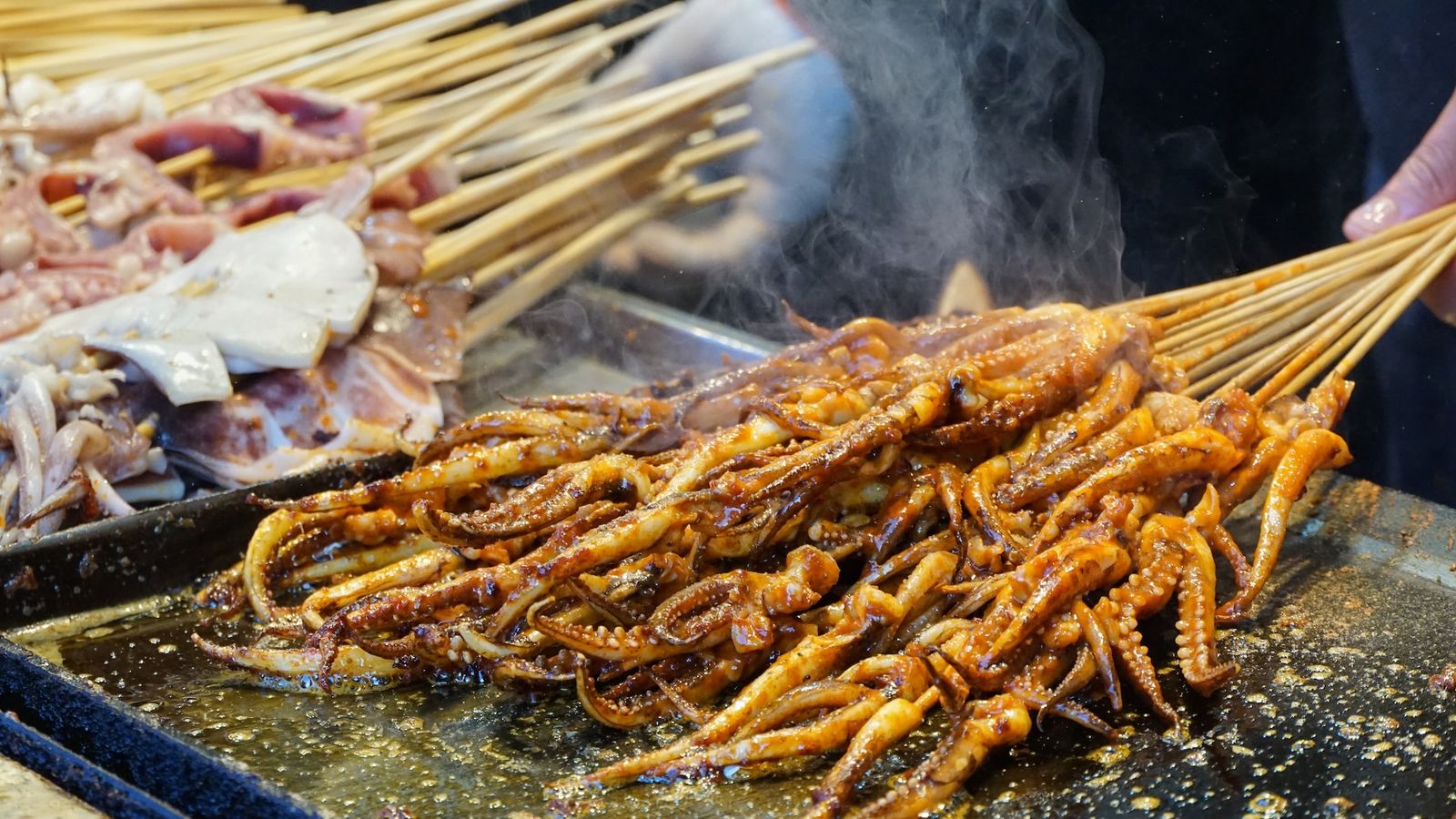
Still common, though less familiar to western audiences, are seafood like shrimp, squid, oysters, and various kinds of fish.
Grilled veggies are common, too. Eggplant, corn, garlic chives, and mushrooms are all delicious grilled foods that you’ll be able to find on your next visit to China.
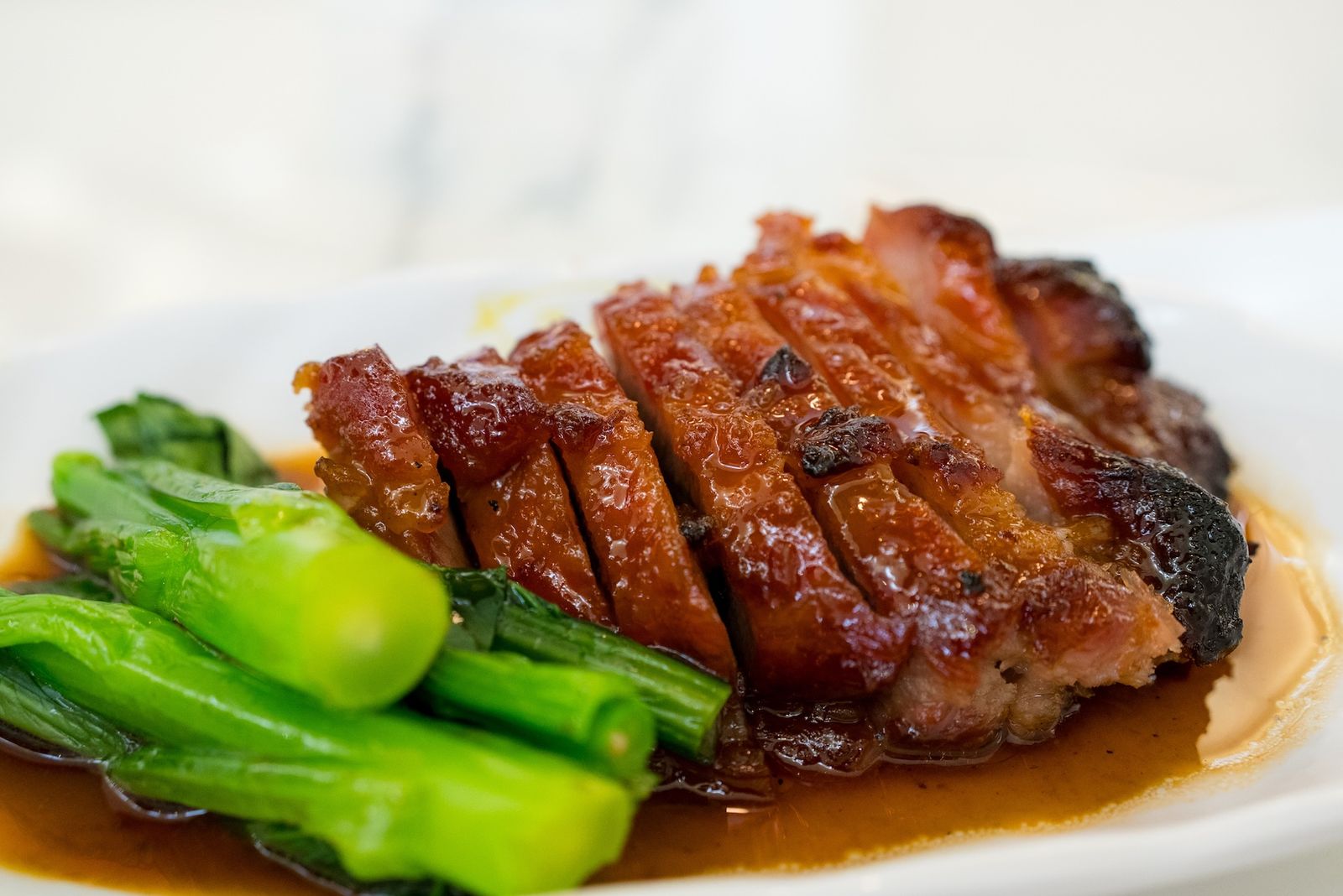
There are also dishes that in many ways define Chinese barbecue for many people, such as char siu (叉燒): Cantonese roast pork. The meat is typically a shoulder cut of pork, seasoned with spices that give the meat its iconic dark red color.
Some less commonly grilled foods that would be hard, or even impossible to find in western countries, are chicken skin, chicken organs like kidneys and hearts, and even pig’s eyes. Though as mentioned, they’re not very common, even in China, and are usually regional specialities.
Sound gross? Don’t knock it ‘till you try it! You might be surprised– some of those lesser known options are a lot tastier than you might think! (Some, okay? Some!)
Where Have You Been All My Life?
Given how important barbecue clearly is to Chinese culture, and how pleasing a walk through a night foodie market sounds to the average westerner, you might be wondering why you’ve never heard much about Chinese barbecue before.
While no one can say for sure, there are a few logical reasons why Chinese BBQ culture hasn’t transferred over to western countries.
First and foremost, western countries simply do not have the same foodie culture that eastern Asian countries tend to have. Food in places like the US and western Europe is more of an indoor, “full meal” type thing. You decide where to eat, you sit down indoors at a restaurant, a waiter takes your order, and everyone gets their own meal.
Whereas in Asian countries like China, Thailand, and Vietnam, the xiǎochī-style smaller portions and outdoor markets are very common.
Naturally, it simply doesn’t easily “translate” to western audiences. Western cities just don’t usually have places to put these types of culinary experiences. The closest match for cities in the US would be places like fairs or concerts, where you’re more likely to find hot dogs and deep fried pickles. And even in these scenarios, food is often more of an afterthought rather than the main attraction.
So it makes sense why Korean BBQ has gained more traction in the US. It’s still unconventional, but the concept of sitting down indoors and having a waiter take your order is a bit better of a fit.
Another idea as to why Chinese BBQ culture hasn’t gained popularity in the west, is that it’s actually hard to scale from a business point of view. Korean BBQ scales well into large, high-margin restaurants. But Chinese BBQ food stalls are a much smaller operation.
The Future Of Western BBQ
All that said, rural BBQ traditions and camping in China do have parallels to western culture. So in some ways, western and Chinese barbecue enthusiasts probably have more in common than they think!
And just because night food markets haven’t taken off yet in the West, doesn’t mean they never will. Markets such as the 626 Night Market in California are starting to pop up, heavily inspired by Asian night market tradition.
So who knows, maybe a few viral videos on TikTok will start a larger trend, and we’ll get to experience the same amazing flavors of China without the 16-hour flights.
But in the meantime, why not plan a trip to experience these delights for yourself?
And if you really want an adventure, why not learn some Chinese, too? It’s one of the best decisions you could ever make.
(Ok. Article over. We’re starving now, so we have to go eat…)
See you next time!
FAQs
Is Chinese BBQ Like Korean BBQ?
Both involve social eating with grilled meat. But unlike Korean BBQ, Chinese BBQ is typically not prepared by guests at the table, and the flavors are usually quite different.





References
-
毕楠. (2025). Burial bricks show evidence of barbecue parties. Chinadaily.com.cn. ↩